Insider's Guide
Living in Yellow Springs, Ohio
By Laura Pardo Rao — 18-year resident
REALTOR® | RH2LCIPS | SRES®
Named Ohio Magazine's Best Hometown 2025–26. But we already knew.
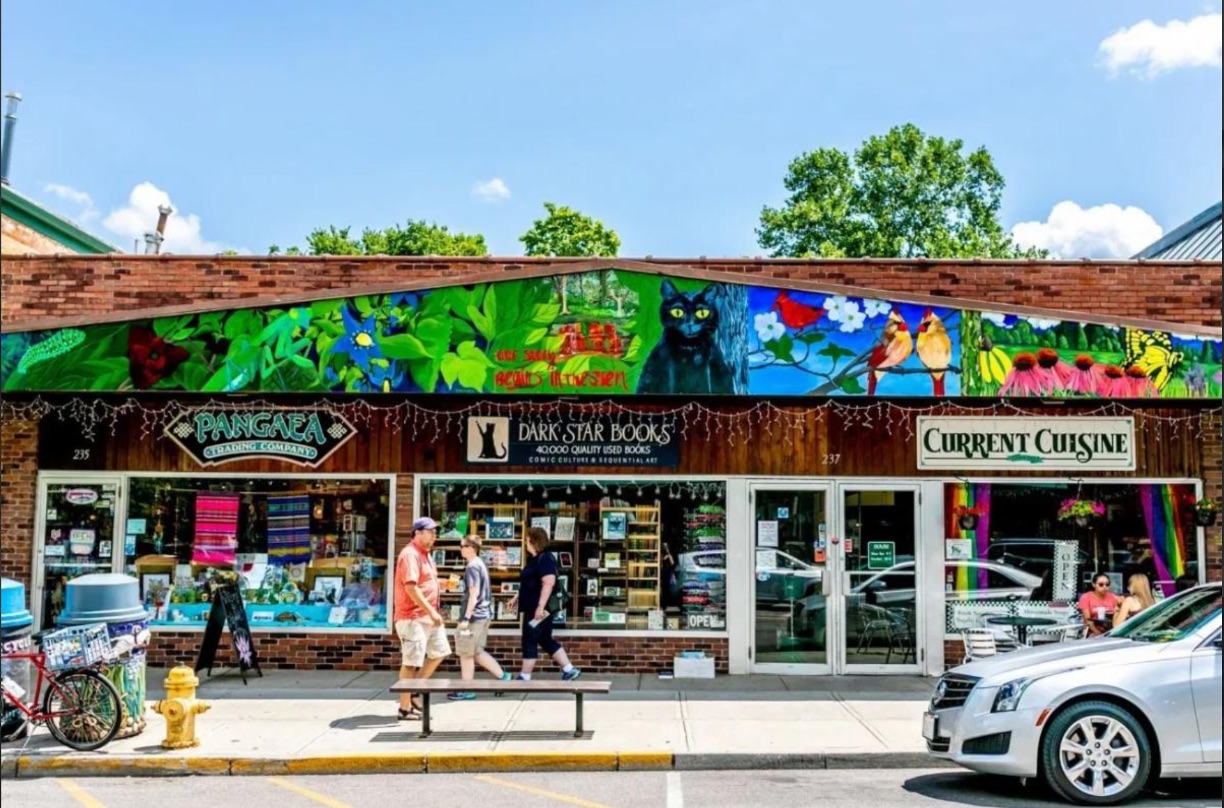
What Yellow Springs is.
Yellow Springs is a village of about 3,500 people in Greene County, Ohio — 25 minutes east of downtown Dayton, tucked against the edge of Glen Helen Nature Preserve. It's walkable. It's creative. It's proudly weird. And it was named Ohio Magazine's Best Hometown 2025–26. But we already knew.
This is not a suburb. It's a self-contained village with its own school district, its own downtown, its own culture, and its own gravitational pull. The kind of place where an errand takes 40 minutes because you run into everybody — and that's not inefficiency, it's community.
If you're relocating to the Dayton region and want walkability, nature, independent business culture, and a neighborhood where your kids can actually ride their bikes to school — this is the place to understand.
Relationship to Dayton and the Miami Valley.
Yellow Springs sits along Route 68, about 25 minutes east of downtown Dayton and about 15 minutes from Xenia (the Greene County seat). Wright-Patterson Air Force Base is a 20-minute commute. Columbus is about an hour northeast. Cincinnati is about 90 minutes south.
It's close enough to everything in the Miami Valley to be practical, but far enough — and distinct enough — to feel like its own world. Most people who move here are choosing the village intentionally, not defaulting to a suburb.
Housing character and inventory realities.
The oldest homes are the ones that stop you on the sidewalk. Craftsman bungalows, Victorian-era houses with front porches and original woodwork you simply cannot replicate today. Some go back to the 1800s, built when this land was farmland and apple orchards and people built things to last.
Then come the mid-century neighborhoods — ranches and raised ranches built in the 50s and 60s by local craftsmen. Solid bones, generous lots, houses that have been loved for decades and still have plenty of life left.
Move outward and you'll find newer custom builds and developments like Spring Meadows — 90 new homes on 23 acres, modern finishes and layouts, still walkable to everything, with an additional 4 acres of green space built in.
And beyond the village edge — working farmland, open roads, that feeling of space even though you're minutes from everything. Because of its rural designation, buyers may qualify for a USDA loan in Yellow Springs — zero down payment for eligible buyers. That's worth knowing before you assume it's out of reach.
There is no one type of Yellow Springs home. Every street looks a little different. That's not an accident.
Inventory is tight. This is a village of 3,500 with high demand and limited buildable land. Homes don't sit on the market long, and well-priced listings regularly attract multiple offers. If you're serious about Yellow Springs, you need to be ready to move — and you need an agent who knows what's coming before it hits the MLS.
It's the intangibles.
Yellow Springs is hard to describe to someone who hasn't been here. You're tucked away — right next to Glen Helen Nature Preserve — but you never feel isolated. You feel held. There's a difference.
This isn't a cookie cutter neighborhood. It's a real, established village where people know each other, look out for each other, and show up for each other. When I moved here pregnant from New Jersey, worried I'd end up next to a mall, I found exactly what I didn't know I was looking for.
A village with a long memory.
Yellow Springs was founded in 1825 — originally as a utopian community, which honestly still tracks. The natural springs that gave the village its name were believed to have healing properties, and people traveled here for them in the 1800s. The land you're walking on has been farmland, apple orchards, and a railroad stop. The bones of this place go deep.
Antioch College was founded in 1850 and shaped everything about this village. Its first president, Horace Mann, was the father of public education in the United States. Antioch was among the first colleges in the country to admit Black students on equal terms, and the first university in the U.S. to pay female professors the same as their male counterparts.
Notable alumni include Coretta Scott King, Rod Serling — creator of The Twilight Zone — Stephen Jay Gould, and two Nobel Prize winners. The creative and progressive DNA of this college soaked into the village and never left.
In 1979, Yellow Springs became the smallest town in the country to pass a law against discrimination based on sexual orientation. That's not a footnote — that's a character trait.
The bag of sugar and flour.
Every Christmas, the village's public works staff delivers bags of flour and sugar to local widows and widowers. This tradition has been running for 130 years — since 1894, when Wheeling Gaunt, a former slave who became a wealthy landowner and philanthropist in Yellow Springs, donated roughly nine acres of land to the village with one condition: that the income be used to deliver flour each winter to the "just and worthy widows" of the town.
Originally 23 widows received 75 pounds of flour each. Today roughly 90 to 100 residents receive it — flour and sugar both, delivered by public works employees who knock on doors and stay for a chat.
Recipients usually bake something and share it with neighbors.
Of course they do.
This is Yellow Springs.
Parks, trails, and the nature next door.
You can walk to a state park in minutes. Glen Helen — a thousand acres of trails, waterfalls, and old growth forest — is literally in your backyard, open to the public. The Glen Helen Raptor Center rehabilitates hawks, owls, falcons, and a resident eagle. John Bryan State Park and Clifton Gorge are minutes away. The Little Miami Scenic Trail runs through the area. A greenbelt surrounds the village, and the Tecumseh Land Trust protects the surrounding farmland.
People drive from Columbus, Cincinnati, and Dayton on weekends just to experience what you get to live in every day — and Yellow Springs is just 25 minutes from downtown. Two miles outside the village, Young's Jersey Dairy offers homemade ice cream, batting cages, miniature golf, and a petting zoo — a local institution that's been drawing families for generations.
The food, drink, and local business scene.
It punches way above its weight for a village of 3,500. The Winery and The Emporium both carry exceptional wine selections. Current Cuisine for a sit-down meal. Miguel's Tacos food truck for when you want something fast and really good. Ye Olde Trail Tavern — the oldest tavern in Ohio, serving locals since 1827. Yellow Springs Brewery — celebrating its 13th anniversary and my personal Friday night spot — is the town's living room. Locals show up every week. Food trucks rotate through regularly. Tons of coffee shops. There's always something, and it's always local.
And if the night is still young — or even if it isn't — there's always The Gulch. The dive bar. The place you end up when you dare. Live music, dancing, pool table, the kind of energy that reminds me of my NYU days. Always lively, always unpredictable, always Yellow Springs.
No chains. On purpose. What you have instead is Tom's Market — the village's own grocery store — and businesses that have been here for years because the community supports them.
A typical Saturday.
You wake up and walk — or bike — to the farmers market. You pick up a few things, run into three people you know, and end up standing on a corner talking for twenty minutes. You stop at the bakery. Maybe you grab a Kouign-Amann from Two Fools' Boules — a buttery, caramelized pastry you can only find in Brittany, France, made here by a guy who used to be the librarian at the local elementary school and does this on the side. That's Yellow Springs. People here support people here.
An errand takes 30 to 40 minutes minimum — not because the line is long, but because you run into everybody. That's not inefficiency. That's community.
The social life.
New Year's on Short Street. Battle of the DJs. Pop-up parties that happen because someone decided tonight was the night. There's always a sense of creativity, of belonging, of something happening. You walk down the street and bam — you have an incident. You meet someone. You connect. That's just how it works here.
And don't be surprised if you walk past a group of people protesting on the corner on a Saturday afternoon. It's completely normal here. Yellow Springs has always had a little hippie in its soul — free-thinking, outspoken, unafraid to take up space. It's part of what makes this village unlike anywhere else in Ohio.
For families.
Kids ride their bikes to school here. Actually ride their bikes. There are rec soccer leagues, t-ball, mom groups that have met weekly for years. It's the kind of neighborhood where children still have the childhood that people write books about wanting back. Safe, walkable, known. The Yellow Springs school district has a $67 million remodel underway — a serious investment in the next generation.
The senior community is well-supported and active — integrated into village life, not pushed to the edges. You'll find them at the brewery, the farmers market, and the pop-up parties.
Chickens are normal here.
Backyard chickens, vegetable gardens, fruit trees, compost bins — this is just Tuesday in Yellow Springs. People grow things. People raise things. It's not a trend, it's a lifestyle that never went away. If you've ever wanted a little self-sufficiency and neighbors who trade eggs for zucchini without it being weird — you're going to feel very at home.
Bartering is alive and well here. Not as a novelty. Just as a way of doing things.
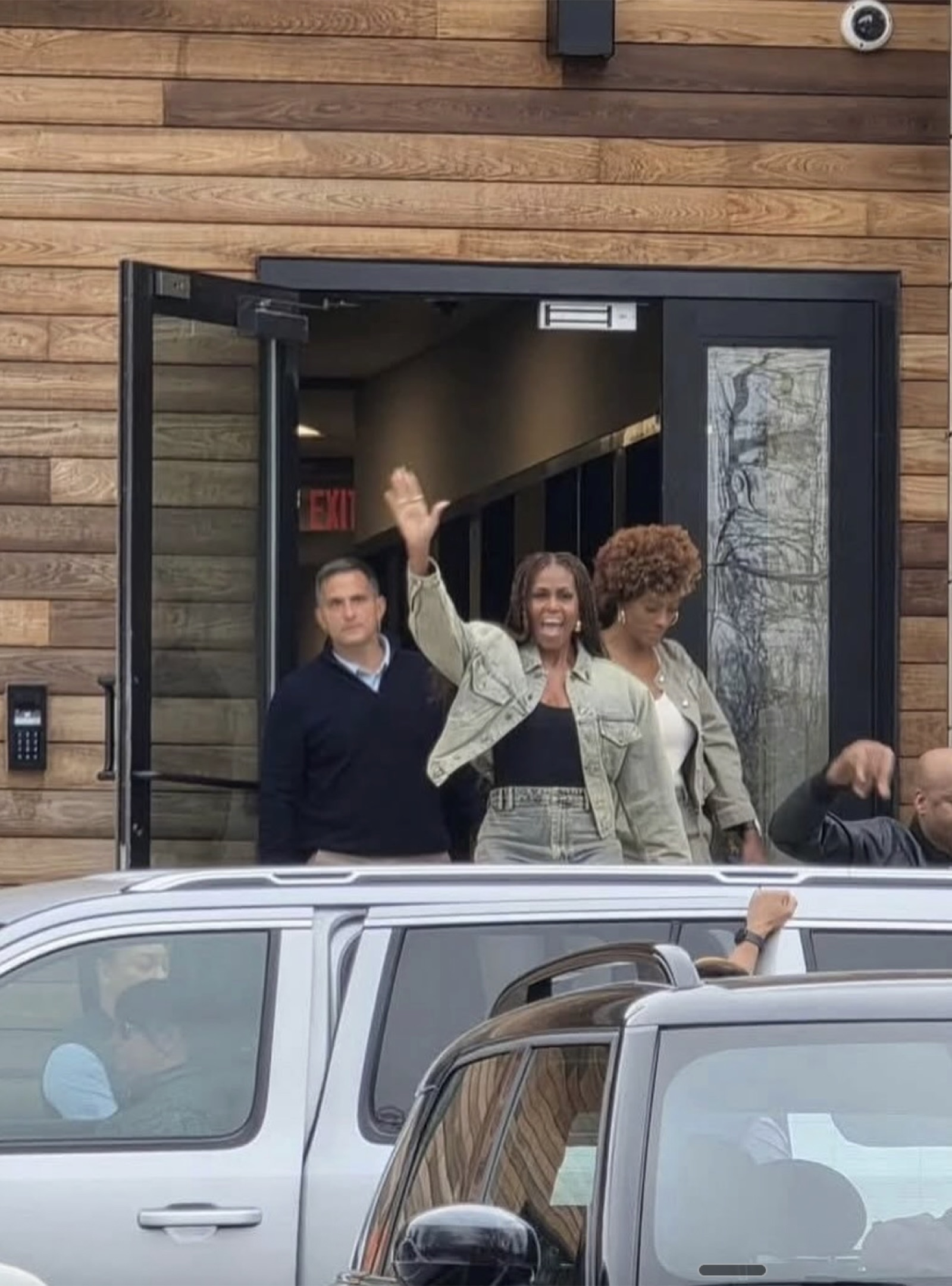
And then there's Dave. And Michelle.
Dave Chappelle grew up splitting his time between Washington D.C. and Yellow Springs — summers, holidays, the rhythm of two places that shaped one person. He became a global superstar and came back to Yellow Springs. He stays. He purchased the old fire station and transformed it into YS Firehouse — an intimate comedy club. He invested in WYSO, the local public radio station. He calls Yellow Springs "a thinking person's town." He means it.
Michelle Obama visited WYSO — right here in the village — and said Yellow Springs "represents the truth of America." She said driving through the community reminded her of the positive spirit she encountered while campaigning across the country. Decency. Openness. A willingness to connect.
These are not people passing through. This is a place that pulls people back. That's just Yellow Springs.
The honest part.
Antioch College has had its struggles, and the village feels that. But the spirit — the creativity, the openness, the sense that ideas matter — never left. If anything, the community has doubled down on protecting what makes this place magic.
Inventory is limited. Prices have climbed. If you want a Craftsman bungalow with original woodwork, expect competition. The village is small and there's only so much buildable land — that scarcity is part of the appeal but also part of the friction.
Tourism brings visitors on weekends, especially in summer and fall. Xenia Avenue can feel crowded on a Saturday. Parking can be tight. If you're looking for solitude every day of the week, the surrounding countryside delivers that — but the village center is social by design.
And it's a small town. People know your business. That intimacy is a feature for most residents, but it's worth naming.
Imagine living here.
Explore the region.
Yellow Springs is one piece of the Miami Valley. Each community nearby attracts a different kind of buyer — understanding the differences helps you find the right fit.
Dayton — The Regional Hub
The center of gravity for the Miami Valley. 50+ neighborhoods, a deep food and arts scene, and one of the most undervalued housing markets in the Midwest. Start here to understand the region.
Xenia
The Greene County seat — affordable, trail-connected, and in the middle of a genuine downtown revival. 15 minutes from Yellow Springs and one of the most accessible entry points in the region.
Frequently asked questions.
Yellow Springs is in Greene County, Ohio — about 25 minutes east of downtown Dayton via Route 68. Greene County is part of the Greater Dayton metro area.
Yellow Springs is about 25 minutes east of downtown Dayton via Route 68. Wright-Patterson Air Force Base is roughly 20 minutes away. Columbus is about an hour northeast.
Prices vary widely depending on era and condition. Craftsman bungalows and Victorians in the village center typically list from the mid-$200s to $400K+. Mid-century ranches run $200K–$350K. New construction in developments like Spring Meadows starts higher. Properties outside village limits may qualify for USDA zero-down loans.
Yes. Kids ride bikes to school, the village is walkable, and the school district has a $67 million remodel underway. There are rec leagues, mom groups, and a senior community that's active and integrated. The pace is slower and the streets are safe — it's the kind of childhood people write books about.
Glen Helen Nature Preserve (1,000 acres of trails and waterfalls), Yellow Springs Brewery, the weekly farmers market, Ye Olde Trail Tavern (oldest tavern in Ohio), local coffee shops, art galleries, pop-up events, and the Little Miami Scenic Trail. No chains. All local, all the time.
Ohio Magazine named it Best Hometown 2025–26, but residents have known for decades. The combination of walkability, nature access, independent businesses, progressive culture, strong schools, and genuine community is rare anywhere — let alone 25 minutes from a mid-size metro.
Inventory is limited and competition for homes is real. Prices have climbed. Weekend tourism can make Xenia Avenue feel crowded. Parking is tight on Saturdays. And it's a small village — people know each other, which is a feature for most but worth knowing upfront.
Some properties in and around Yellow Springs may qualify for USDA zero-down loans due to the rural designation. It's worth checking before you assume anything is out of reach. Book a Clarity Call and I'll walk you through your options.
Ready to make the move?
I've lived here for 18 years. I know every street, every neighborhood, every hidden gem — and I know what's available right now. Let's talk.
Laura Pardo Rao
REALTOR® | RH2LCIPS · SRES®